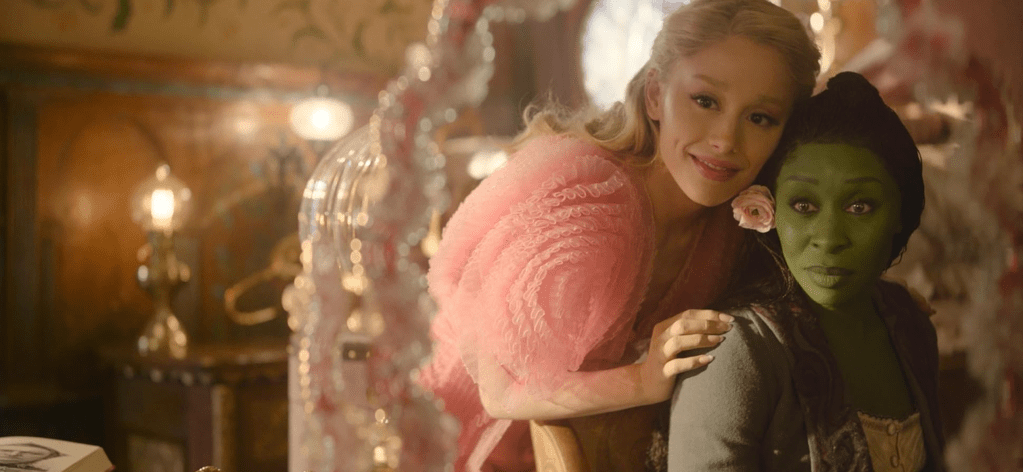
There’s a moment about thirty minutes into Wicked where Cynthia Erivo’s Elphaba stands in Madame Morrible’s office, her green skin catching the light in a way that should feel otherworldly but instead feels achingly human, and she whispers “I’ve been waiting for this my whole life.” It’s a quiet line, easily overshadowed by the bombast that surrounds it, but it’s delivered with such bone-deep longing that I felt it in my chest. That’s when I knew: this movie was going to wreck me in all the best ways.
I went into Wicked with cautious optimism. I’ve loved this musical since I first heard the cast recording years ago, and the prospect of seeing it brought to life on the big screen was thrilling and terrifying in equal measure. The trailers looked gorgeous but also… a lot. Jon M. Chu had proven himself with In the Heights, but this was a different beast entirely. And then there was the decision to split it into two parts, which felt potentially indulgent, possibly a cash grab, and definitely a risk.
Reader, I need not have worried.
Wicked is a triumph. It’s a lush, emotionally resonant, stunningly crafted piece of cinema that justifies every second of its 160-minute runtime. This is a film that understands its source material on a cellular level and elevates it, expanding the world of Oz and the inner lives of its characters in ways that feel both necessary and revelatory. Chu hasn’t just adapted the musical—he’s created something that stands alongside it as its own complete artistic statement.
Let’s start with what makes this film soar: Cynthia Erivo’s performance as Elphaba Thropp. This is the kind of work that reminds you why movies exist, why we sit in darkened theaters and let stories wash over us. Erivo doesn’t just play Elphaba; she inhabits her with such complete commitment that you forget you’re watching a performance. Every micro-expression, every shift in her voice, every moment of stillness speaks volumes. When Elphaba is trying to make herself small in a world that already sees her as other, Erivo’s body language is heartbreaking—hunched shoulders, downcast eyes, a woman who has learned to apologize for existing. But when she finally claims her power, when she stands tall and defies gravity and every person who’s ever told her she’s too much or not enough, Erivo unleashes something magnificent.
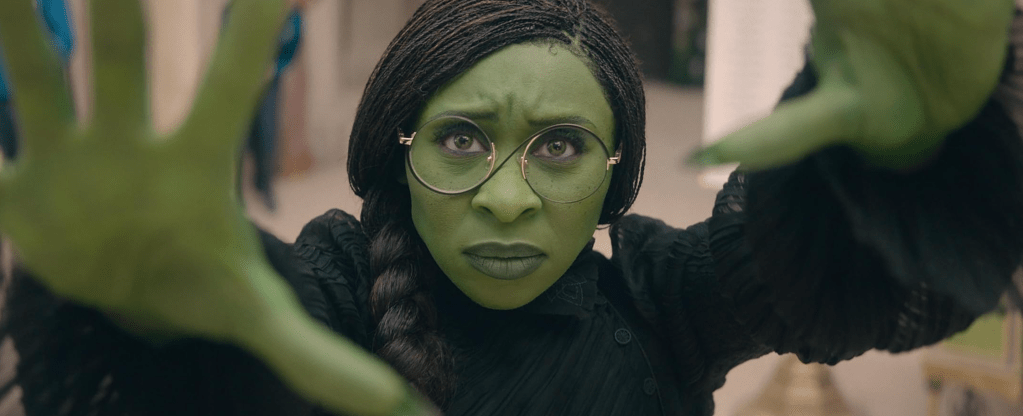
And that voice? Erivo’s vocals are technically flawless, yes, but it’s the emotion she pours into every note that destroys you. “The Wizard and I” is sung with such naked hope and vulnerability that I found myself leaning forward in my seat, willing everything to work out for her even though I know exactly how this story goes. “Defying Gravity” is—and I don’t say this lightly—one of the greatest musical performances ever captured on film. The way Erivo builds from quiet determination to explosive defiance, holding that final “me” for what feels like an eternity while literally ascending above everyone who’s ever diminished her, is transcendent. This is the performance of Erivo’s career, and it should sweep every award imaginable.
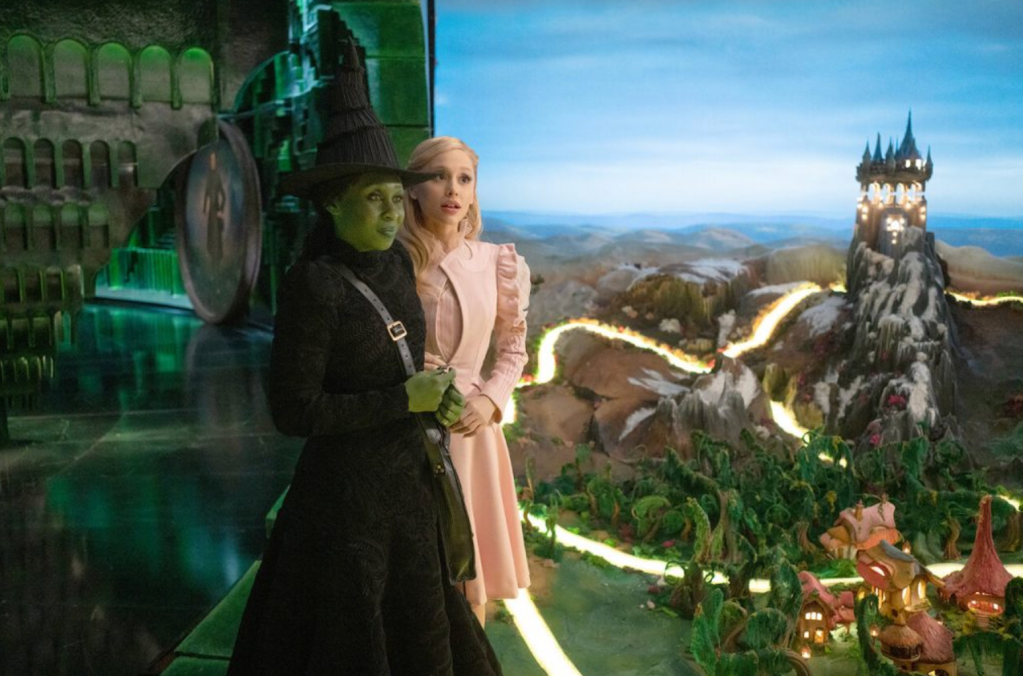
But Wicked wouldn’t work without its other half, and Ariana Grande’s Glinda is a revelation in ways I did not anticipate. I’ll admit I had reservations about Grande’s casting. Not about her vocals, obviously, but about whether she could disappear into a character after spending years as one of the biggest pop stars on the planet. She proved me spectacularly wrong. Grande’s Glinda is bubbly and self-absorbed and desperate for approval, but there’s real intelligence and pain underneath all that pink and blonde perfection. Grande finds the humanity in Glinda’s superficiality, showing us a young woman who’s been taught that her value lies in being liked, being pretty, being unthreatening. The way her face falls when she realizes Elphaba has been excluded yet again, or the flicker of genuine admiration when she sees Elphaba do magic, or the moment where you can see her choosing popularity over what’s right—Grande plays all of this in such a way that Glinda becomes far more than just comic relief.
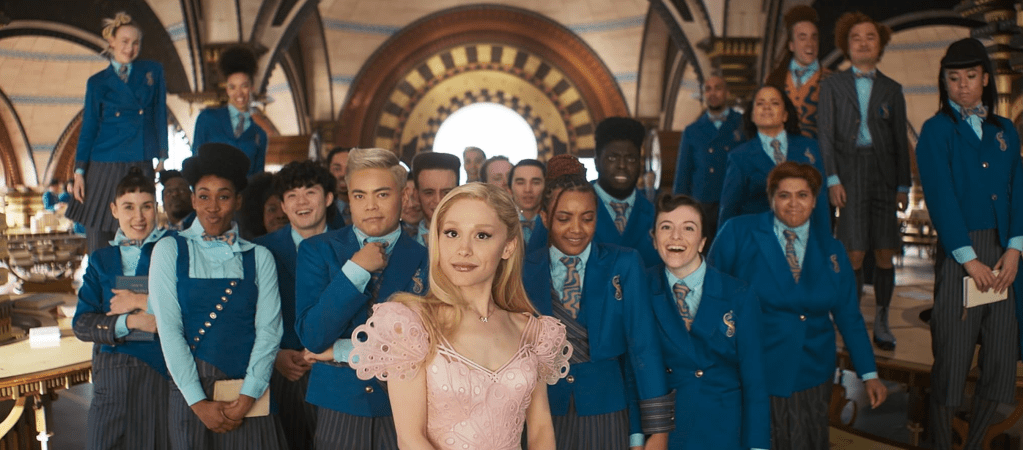
“Popular” is an absolute delight, with Grande leaning into the physical comedy and vocal runs while never losing sight of what the song is really about—Glinda trying to help in the only way she knows how, even if that help is misguided. And when Grande and Erivo duet on “What Is This Feeling?”, their voices blend so perfectly while their characters are actively antagonizing each other that it’s both funny and thrilling. By the time we get to “Defying Gravity” and Glinda makes her choice to stay on the ground while Elphaba flies, Grande’s face does more work than any dialogue could. You see her heart breaking. You see her choosing safety over courage. You see her realizing, too late, what she’s giving up.
The chemistry between Erivo and Grande is electric. They make you believe in this friendship completely, the way it starts in mutual irritation, softens into genuine affection, and deepens into love (and let’s be clear, this is love, whether you read it as romantic or platonic). The loveliest scene in the entire film might be the quiet moment where they’re simply existing together in their dorm room, Glinda doing Elphaba’s hair while they talk about nothing and everything. It’s so tender, so intimate, that when their friendship is eventually torn apart, the stakes feel devastating.
The supporting cast is uniformly excellent. Michelle Yeoh brings gravitas and a hint of menace to Madame Morrible, playing her as someone who genuinely believes she’s doing the right thing even as she manipulates and controls. Jeff Goldblum is perfectly cast as the Wizard—charming, avuncular, and ultimately hollow, a man who’s built an empire on smoke and mirrors because he has nothing real to offer. Jonathan Bailey’s Fiyero is more than just a pretty face (though he is definitely that). Bailey finds the loneliness in Fiyero, the sense that he’s floating through life because he hasn’t found anything worth caring about until he meets Elphaba. Their connection crackles with chemistry, and the way Bailey’s eyes follow Erivo in their scenes together is swoon-worthy.
Marissa Bode deserves special mention as Nessarose, Elphaba’s younger sister. This is Bode’s feature film debut, and as a wheelchair user playing a wheelchair-using character, she brings an authenticity and complexity to Nessa that elevates what could have been a one-note role. The film holds space for the relationship between the sisters, and both Erivo and Bode make the most of it. You feel the weight of Elphaba’s responsibility and guilt, the way she’s taken care of Nessa their entire lives while never being shown the same care. And you feel Nessa’s frustration and resentment at always being seen as fragile, at having choices made for her, at being defined by what she can’t do rather than what she can. It’s nuanced and moving work.
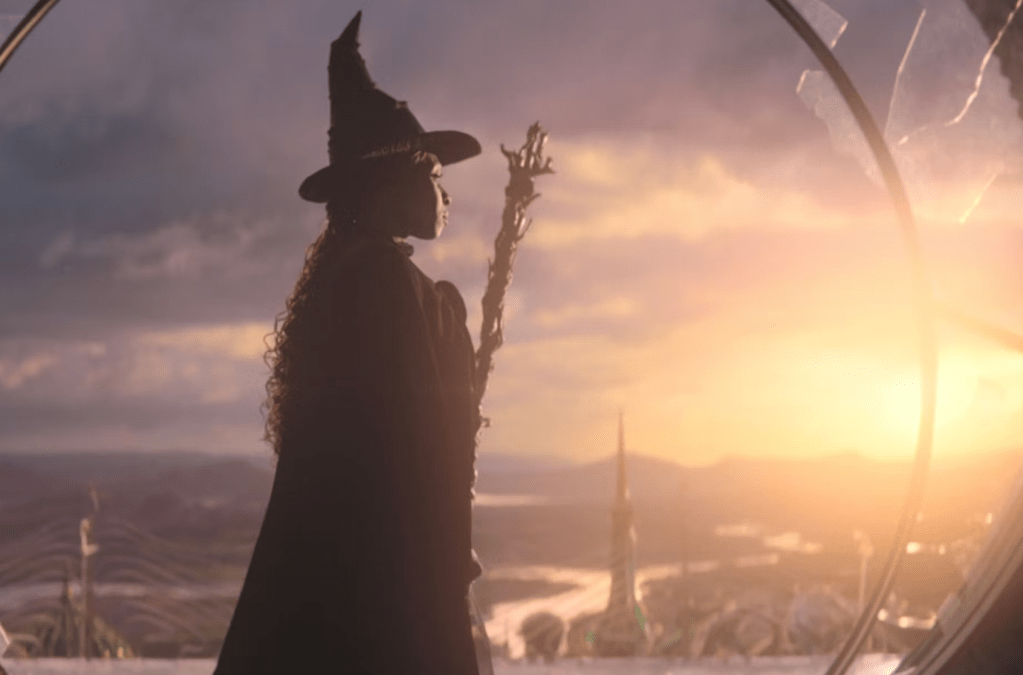
Let’s talk about the technical artistry, because Wicked is a stunning visual achievement. Cinematographer Alice Brooks shoots in widescreen that allows the Land of Oz to feel vast and lived-in. The production design by Nathan Crowley is meticulous—Shiz University feels like a real institution with history and character, the Emerald City is appropriately dazzling, and every location has texture and depth. The costuming by Paul Tazewell is extraordinary, with each outfit telling you something about the character wearing it. Elphaba’s simple black dress and her eventual witch’s hat and cape are iconic, yes, but look at the details—the way her clothes become slightly more elaborate as she gains confidence, the green embroidery that echoes her skin, the way the cape flows when she flies. And Glinda’s wardrobe is a confection of pinks and sparkles that becomes almost armor, protecting a girl who’s terrified of being seen as anything less than perfect.
The choreography by Christopher Scott is dynamic and inventive, particularly during “Dancing Through Life,” which transforms multiple locations into one flowing sequence. The way the camera moves through Shiz during this number, following different characters and storylines while Bailey’s Fiyero basically tap-dances his way through life, is exhilarating. And “One Short Day,” when they visit the Emerald City, is a visual feast that pays homage to the 1939 Wizard of Oz while creating its own distinct aesthetic.
Jon M. Chu directs with confidence and genuine love for the material. He knows when to let the camera linger on an emotional moment and when to pull back for spectacle. He trusts his actors to do the heavy lifting in quiet scenes and knows how to build to the big musical numbers so they feel earned rather than intrusive. The pacing is exceptional—at nearly three hours, the film never drags. Every scene serves either character development or world-building, and often both. The decision to end exactly where the stage musical’s intermission occurs feels absolutely right. “Defying Gravity” is such a perfect climax, such a complete statement of theme and character, that ending anywhere else would have felt anticlimactic.
Stephen Schwartz and Winnie Holzman’s work from the stage musical is preserved and honored here, with Schwartz’s gorgeous score enhanced by John Powell’s orchestrations. The songs are presented without cuts or modern pop arrangements—this is musical theater at its purest, and it’s glorious. The film does add some connective tissue between numbers, expanding scenes and adding dialogue that deepens our understanding of these characters, but it never feels padded. We get more time with Elphaba’s complicated family dynamics, more insight into why Glinda is the way she is, more context for the systematic persecution of Oz’s talking Animals.
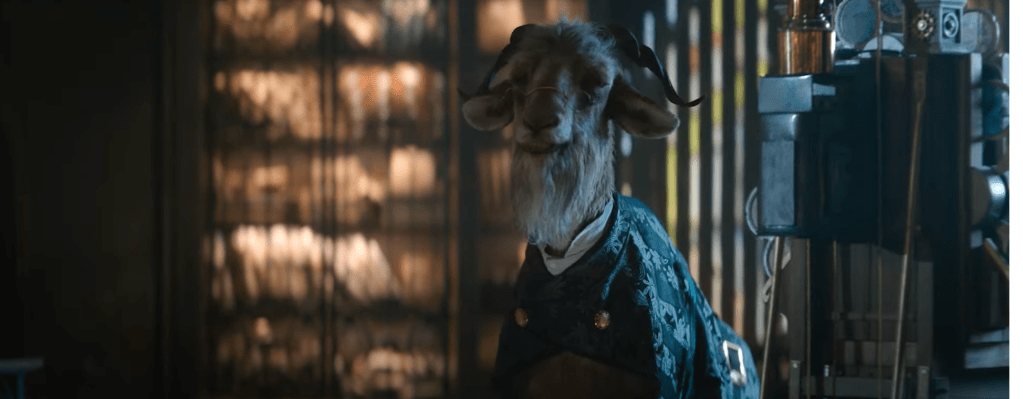
Speaking of which—the Animals subplot is given real weight here, and it’s clearly intended as political commentary. The way Dr. Dillamond (voiced beautifully by Peter Dinklage) is dragged from his classroom, the caged lion cub, the propaganda painting Animals as dangerous and less-than-human—it’s all a bit on the nose, but then again, sometimes the nose is exactly where you need to be hit. The film doesn’t shy away from showing that fascism creeps in slowly, that good people can be complicit in systems of oppression, that standing up when it costs you something is terrifyingly difficult. When Elphaba makes her choice to defy the Wizard and Morrible, she’s choosing to become a fugitive, to be vilified and hunted, to lose everything she’s ever wanted. And she does it anyway.
The allegory for otherness runs throughout the film in ways both subtle and overt. Elphaba’s green skin is treated as something grotesque by nearly everyone she meets. People recoil from her, whisper about her, blame her for things that aren’t her fault. She’s told she’s lucky to even be at Shiz, as if her very existence is an imposition. And yet she’s also expected to be grateful for scraps of acceptance, to make herself smaller and quieter and less threatening. The parallels to racism, ableism, and other forms of marginalization are clear, and the film handles them with care. This is a story about a girl who is told she’s wicked simply for existing as herself, who is demonized for refusing to play along with injustice, and who ultimately chooses truth over belonging.
The friendship between Elphaba and Glinda is the emotional center of the film, and it’s where Wicked does some of its most interesting work. This isn’t just a story about unlikely friends becoming close—it’s about two people who need each other in specific ways, who see each other more clearly than anyone else ever has, and who ultimately want different things. Glinda wants to be loved. Elphaba wants to do good. And when those two desires come into conflict, their friendship fractures in ways that feel both inevitable and heartbreaking.
There’s a reading of this story, and the film doesn’t discourage it, where Elphaba and Glinda are in love with each other. The intensity of their connection, the way they look at each other, the devastation when they’re separated, all support this interpretation. Whether you see them as romantic partners or as soulmates in a platonic sense, what’s undeniable is that they are each other’s person. They change each other fundamentally. And the tragedy is that the world won’t let them be together, at least not in this part of the story.
The ending is gutting. Erivo flying away on her broomstick, literally ascending above everyone, while Grande stays behind, reaching up toward her friend with tears streaming down her face. The image of them on opposite sides of that choice, both of them in tears, both of them losing something irreplaceable, is seared into my brain. It’s a ending that feels both triumphant and tragic, hopeful and devastating. Elphaba is free, but she’s alone. Glinda is still beloved, but she’s compromised herself in ways she’ll have to reckon with. Neither of them gets what they wanted, but both of them have been forever changed.
If I have any criticisms, and they’re minor, it’s that occasionally the film’s color grading feels slightly muted. There are moments, particularly in outdoor scenes, where I wished for more saturation, more vibrancy. Oz should pop off the screen, and sometimes it looks just a touch washed out. And there are a few moments where CGI elements (particularly some of the flying monkeys) don’t quite blend seamlessly with the practical sets. But these are quibbles in what is otherwise a visual feast.
Wicked is that rare adaptation that honors its source material while also expanding and enriching it. It’s a film that earns its runtime, that justifies its existence as a separate work of art rather than just a recorded stage production. It’s a showcase for two extraordinary performances that will be talked about for years. It’s a technical marvel that uses every tool cinema has to offer to create something genuinely magical.
This is a movie about friendship and otherness and the corruption of power and the cost of standing up for what’s right. It’s about two women who love each other—however you choose to define that love—and the impossible choices they make. It’s about the stories we tell about good and evil, and who gets to decide which is which. It’s about a girl who is called wicked simply for refusing to be small, and another girl who discovers too late that being liked and being good are not the same thing.
And it’s about that moment,that glorious, devastating, utterly perfect moment, when Elphaba takes a breath, makes a choice, and leaps into the air. When Cynthia Erivo’s voice soars and breaks and triumphs all at once. When she defies gravity and every person who’s ever told her she couldn’t, shouldn’t, wouldn’t. When she becomes, fully and completely, herself.
Wicked made me cry, made me cheer, made me sit in the theater after the credits finished because I needed a moment to collect myself. This is the kind of movie that reminds you why you love movies, why stories matter, why representation matters, why singing at the top of your lungs in a darkened theater with strangers who’ve become temporary family matters.
Jon M. Chu, Cynthia Erivo, Ariana Grande, and everyone involved in this production have created something truly special. This is not just a good adaptation—it’s a great film, period. And I cannot wait to see where Part 2 takes us, even though I know the journey ahead is going to hurt.
For now, though, I’m holding onto this: the image of a green girl flying, finally, blessedly free. The sound of Cynthia Erivo holding that note like she’s holding the whole world. The sight of Ariana Grande’s face as she watches her best friend soar away. The feeling of witnessing something beautiful and true.
This is what magic looks like. This is what cinema can be. This is Wicked, and it is absolutely, thrillingly wonderful.
 Page, Screen & Beyond
Leave a comment